
Why Managing Stress Isn't Enough—You Need to Train for Peace
Stress isn't the enemy—it's a signal. Learn how to train your nervous system, build heart coherence with HeartMath, and grow lasting inner peace through daily mental fitness practices.

Most people think stress is the problem.
They feel overwhelmed, anxious, or under pressure—and immediately try to fix it. Calm it. Push it away.
But what if stress isn’t the problem? What if it’s actually a signal? Not a signal that something is wrong—but a signal that something needs to be trained.
Because here’s the truth: You don’t rise to the level of your intentions during stress… you fall to the level of your training.
The Hidden Cost of Living in Pressure
Eight years ago, when my husband had a stroke, I stepped in and took over responsibility for our finances. And I unconsciously carried that weight for years.
What I didn’t realize at the time was how deeply that responsibility shaped my internal state. There was an underlying tension that whispered, everything depends on me. Even when nothing urgent was happening, my body stayed in that state.
Recently, I had a breakthrough. I realized: I picked that responsibility up… and I never actually had to carry it the way I had been. But even more than that, I saw something deeper—my body had been trained to live in pressure. Not because my life demanded it… but because I had practiced it.
Why “In-the-Moment” Stress Relief Isn’t Enough
Most of us have learned tools for stressful moments. We take a deep breath. We pick a color and find three things in the room that color. We pause, reset, and move forward.
Those tools are helpful. But on their own, they’re not enough. Using breath or calming techniques only when you’re overwhelmed is like putting a band-aid on something deeper. It helps you cope—but it doesn’t train you.
Think of it like physical fitness. You don’t go to the gym once and expect strong muscles. You build strength through consistent practice. Your nervous system works the same way.
You Can Train Your Brain—and Your Heart—for Peace
Research continues to show that your brain is not fixed—it adapts based on what you repeatedly do. Coach Shirzad Chamine calls this building mental fitness: training your mind to shift away from reactive patterns and into the calmer, grounded state he calls sage.
Neuroscience supports this. You have systems in your brain designed for survival and stress, and systems designed for intelligence, peace, and intentional decision-making. The more you practice regulation—even in small ways—the more you strengthen the pathways that support calm.
Here’s something even more powerful: your heart plays a central role in this process. Organizations like the HeartMath Institute have spent decades studying the connection between the heart, brain, and nervous system. Their research shows that when your heart rhythm becomes more coherent—steady, smooth, and regulated—it directly influences your brain, emotions, and decision-making.
In other words: You don’t just think your way into peace… you can train your body into it.
What Is Heart Coherence (and Why It Matters)?
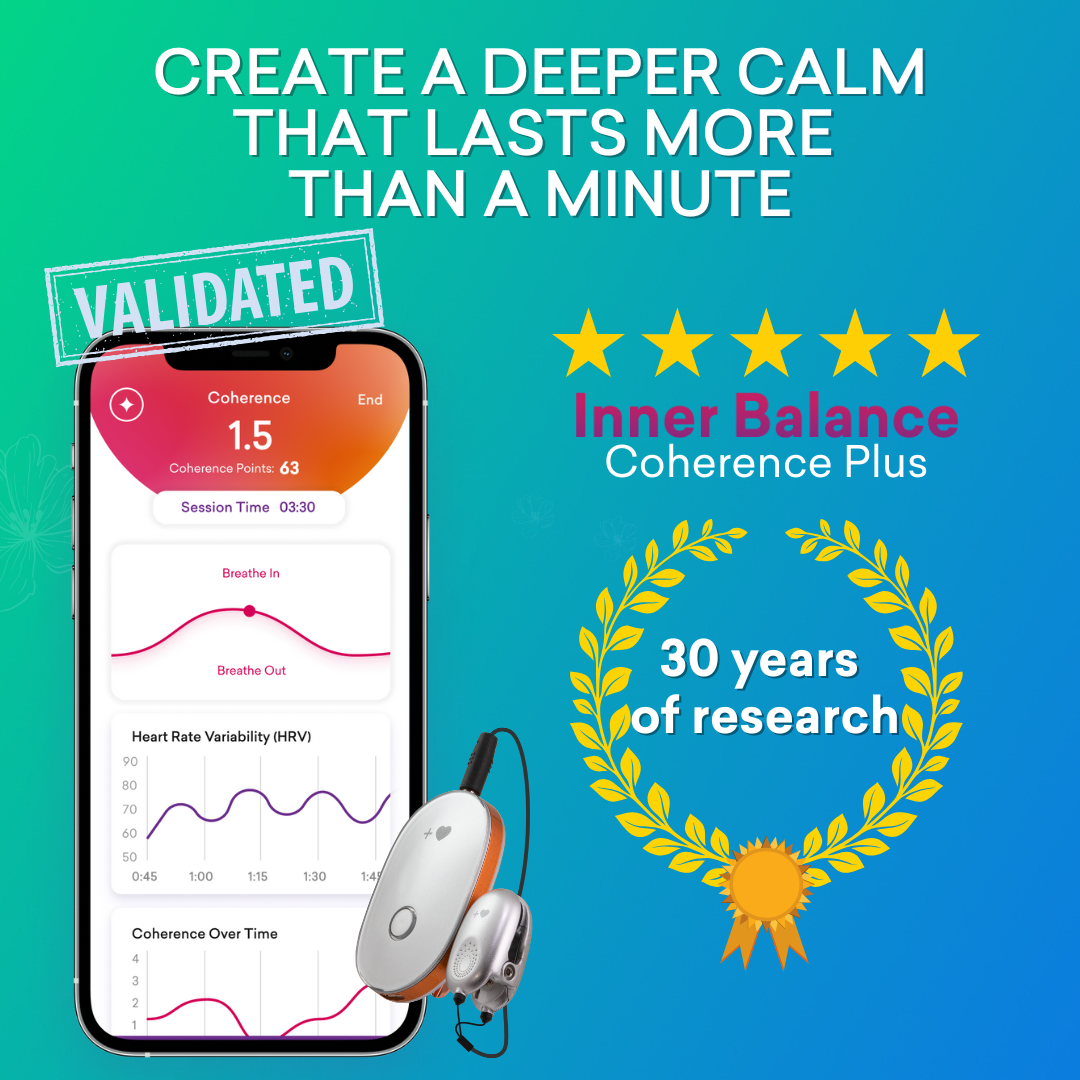
Heart coherence is a measurable state where your heart, brain, and nervous system are working in sync. When you’re stressed, your system becomes chaotic and reactive. When you’re regulated, it becomes ordered, calm, and responsive.
This is why simple practices like intentional breathing and focused attention are so powerful—they don’t just calm you down. They shift your entire physiological state.
This Isn’t Just Science—It’s Spiritual Truth
“To set the mind on the flesh is death, but to set the mind on the Spirit is life and peace.” — Romans 8:6
“You will keep in perfect peace those whose minds are stayed on you…” — Isaiah 26:3
Stayed—anchored, trained, consistent. Jeremiah 17:7–8 describes a life rooted in stability—unshaken even in difficult seasons. This is what a trained inner life looks like.
How to Start Building a Practice of Regulation
1. Practice Daily Breath + Heart Focus (2–5 minutes)
Instead of just breathing to calm down, try this:
- Breathe slowly and deeply
- Bring your attention to the area around your heart; place a hand over the space to help
- Focus on a feeling like gratitude, peace, or appreciation
This is one of the foundational techniques taught through the HeartMath Institute and is known to help shift your system into coherence more quickly.
2. Use “Mental Fitness Reps” Throughout the Day
Coach Shirzad Chamine refers to these as PQ reps—small moments of intentional awareness. Pause and:
- Feel your hands; rub one finger across the lines and ridges of your palm
- Notice your breath as it fills all four sides of your abdomen
- Name three to five objects you can see in front of you
These small resets build your capacity for calm—one moment at a time.
A Simple 60-Second Reset You Can Use Anytime
- Take a slow breath in through your nose
- Gently exhale through your mouth
- Repeat for a few breaths
Now bring your attention to your heart and gently focus on something you appreciate—a person, a moment, or even a small detail in your life. Let your shoulders soften. Relax your jaw.
This is regulation. This is coherence. The more you practice it consistently, the more it becomes your default.
Final Thought: Rethink Stress
The next time you feel stress, don’t immediately try to eliminate it. Pause and acknowledge: I feel stressed right now. Ask: “What am I thinking?” and “Is this fully true?” Then allow it to remind you to build resilience.
Because stress isn’t just something to manage. It’s an opportunity to build something deeper. Peace isn’t something you wait for—it’s something you train for.
Affiliate disclosure: Some links in this post (including links to HeartMath) may be affiliate links. If you purchase through them, I may earn a small commission at no extra cost to you. I only recommend tools I personally use and believe in.
